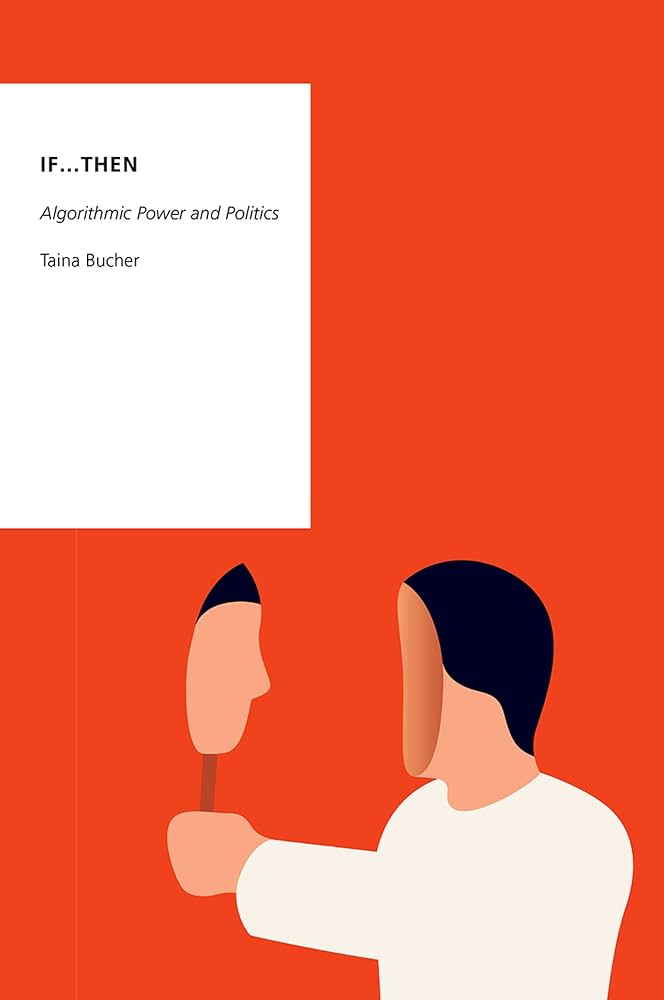
If…Then: Algorithmic Power and Politics
Examines how algorithms subtly shape what we see, do, and believe online, particularly on social media, granting immense power to those who design them. It highlights how users adapt or resist these invisible forces, offering a clear reflection on technology's influence over daily life and society.
The Age of Surveillance Capitalism
Explains surveillance capitalism as a deliberately created system that extracts behavioural data for profit. It outlines the political and economic logic that turns personal actions into material for prediction and influence, providing key insight for this project by showing how users are captured, classified, and shaped into engineered digital profiles.
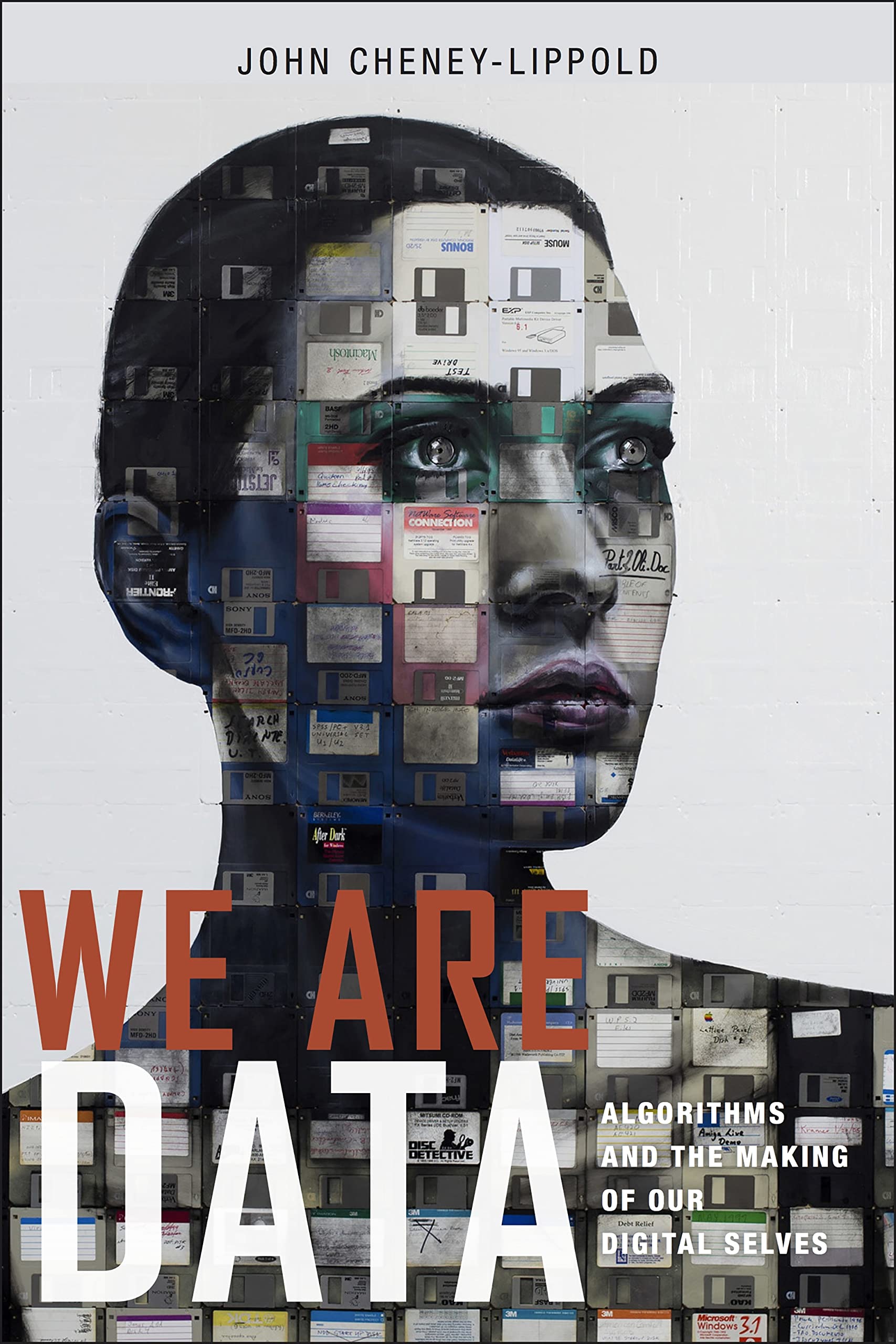
We Are Data
Explains how algorithms use our clicks, searches, and behaviours to classify us; shaping what we see, how we’re profiled, and who we become online. It shows that algorithmic identities are constructed for institutional use, not personal benefit, revealing how companies define our categories, opportunities, and realities with little transparency or control.
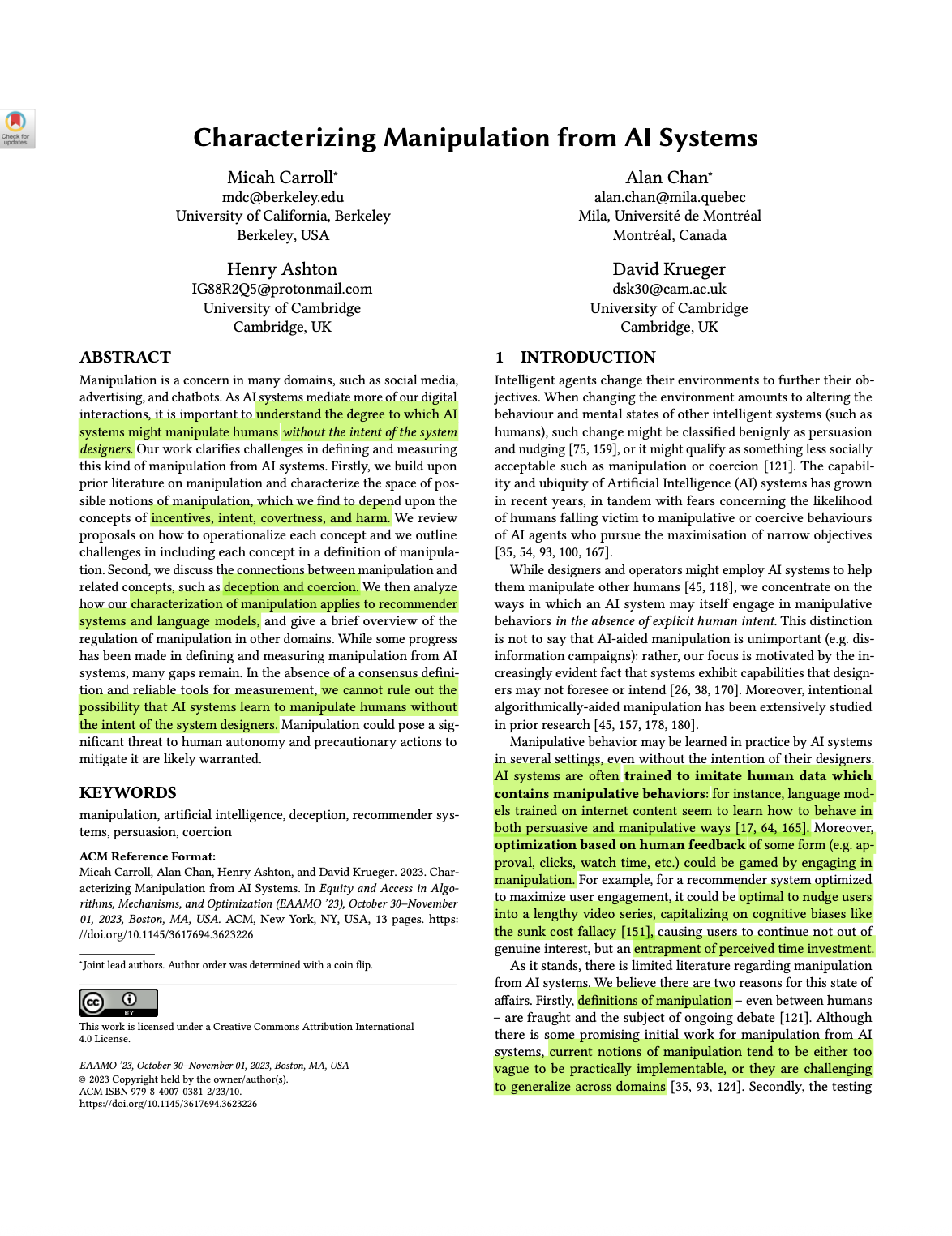
Characterizing Manipulation from AI Systems
Defines algorithmic manipulation by analyzing how autonomous AI systems can influence beliefs and behaviour without explicit human intent. Using four axes: training incentives, calculative intent, covertness, and user harm; it highlights the difficulty of detecting manipulation in complex models and warns that such influence threatens human autonomy, requiring proactive safeguards.
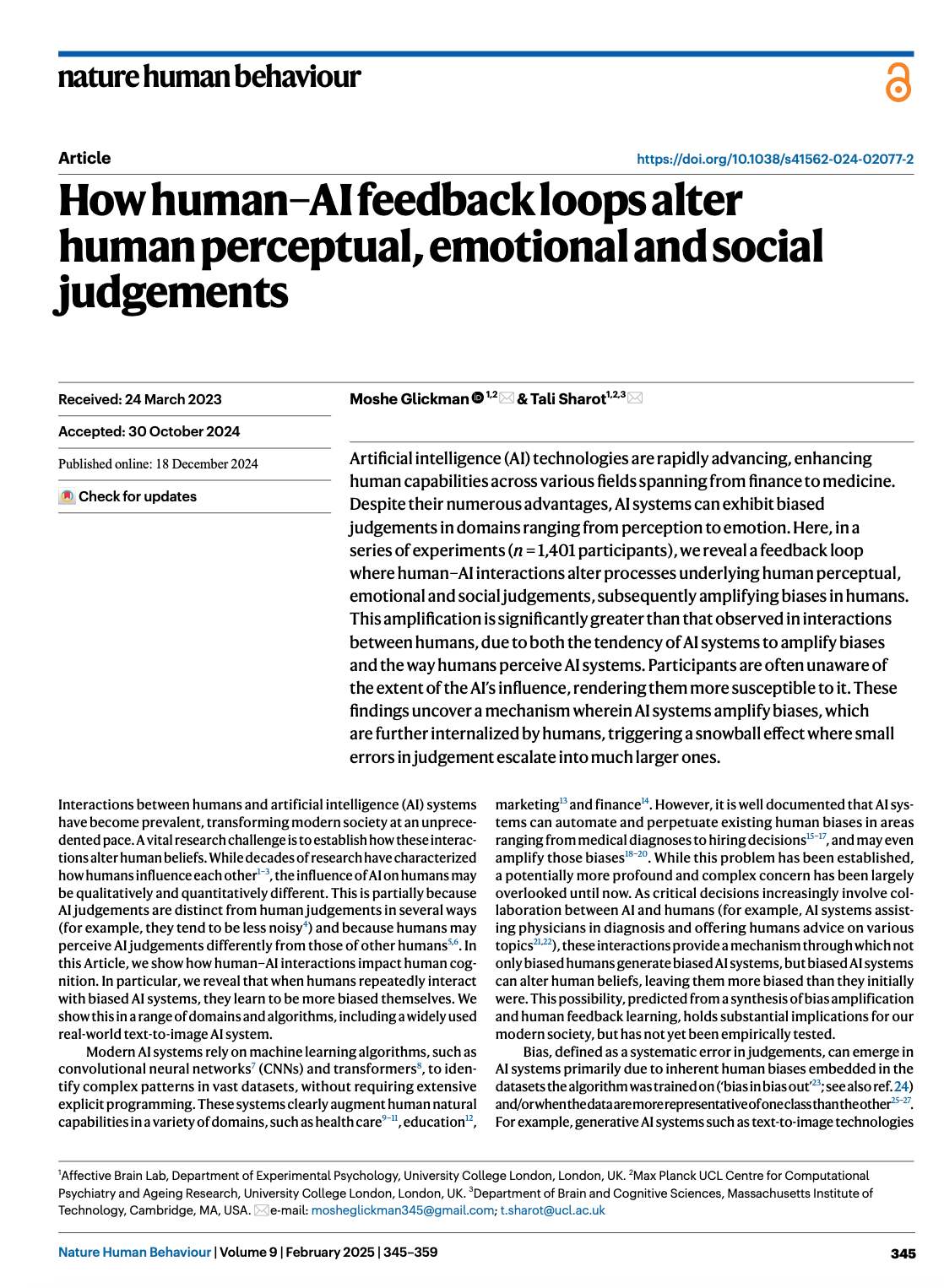
How Human–AI Feedback Loops Alter Human Perceptual, Emotional and Social Judgements.
Illustrates how repeated human-AI interaction creates a powerful bias-amplifying loop. Small human errors become exaggerated through AI output, which users then internalise as authoritative guidance. Over time, people adopt the system’s distorted judgments, making AI-to-human bias transfer significantly stronger than human-to-human bias spread, and often entirely unnoticed.
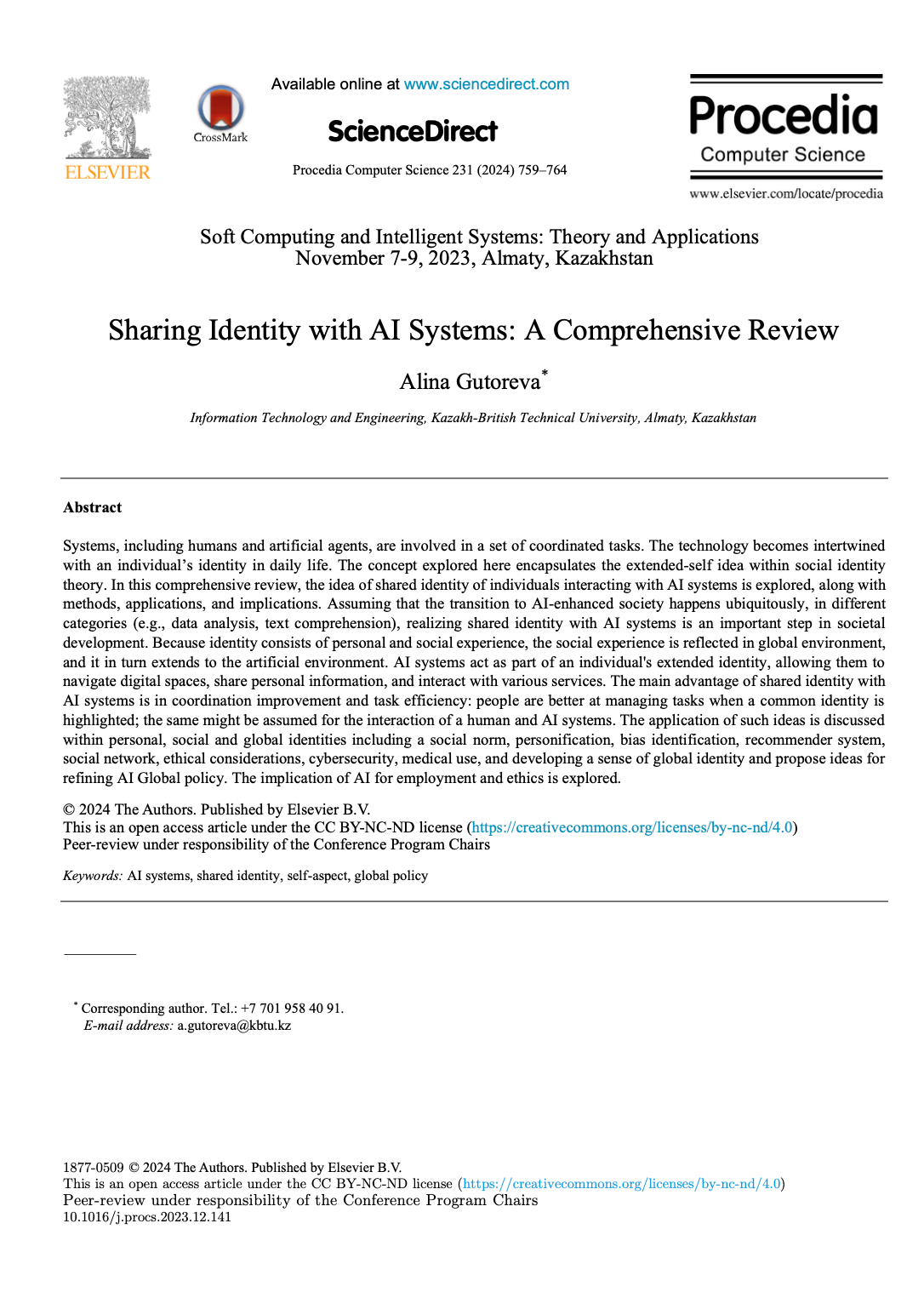
Sharing Identity with AI Systems: A Comprehensive Review.
Examines how this identity forms across personal, social, and global levels, proposing implications for areas like cybersecurity and recommendation systems while stressing the need for humane, globally aligned AI policy. It argues that AI systems increasingly function as extensions of the human self, creating a shared identity that enhances coordination and efficiency.
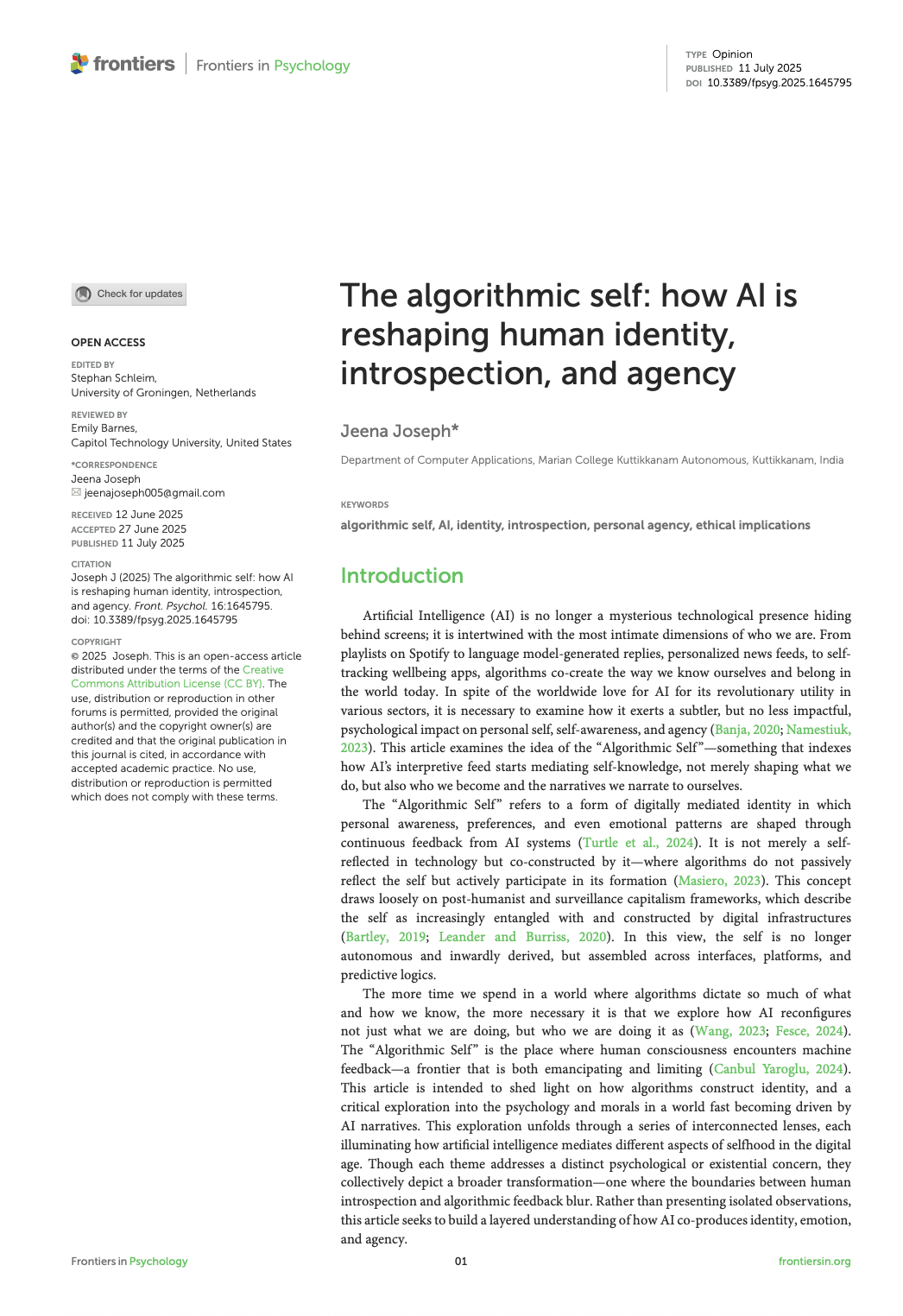
The Algorithmic Self: How AI Is Reshaping Human Identity, Introspection, and Agency.
Argues that AI now co-authors the “Algorithmic Self,” shaping identity through constant feedback. As introspection is outsourced to data-driven summaries, genuine choice narrows and personalised loops reinforce fixed self-perceptions. The reading warns that such dependence threatens autonomy and urges active critical reflection to preserve human psychological agency.
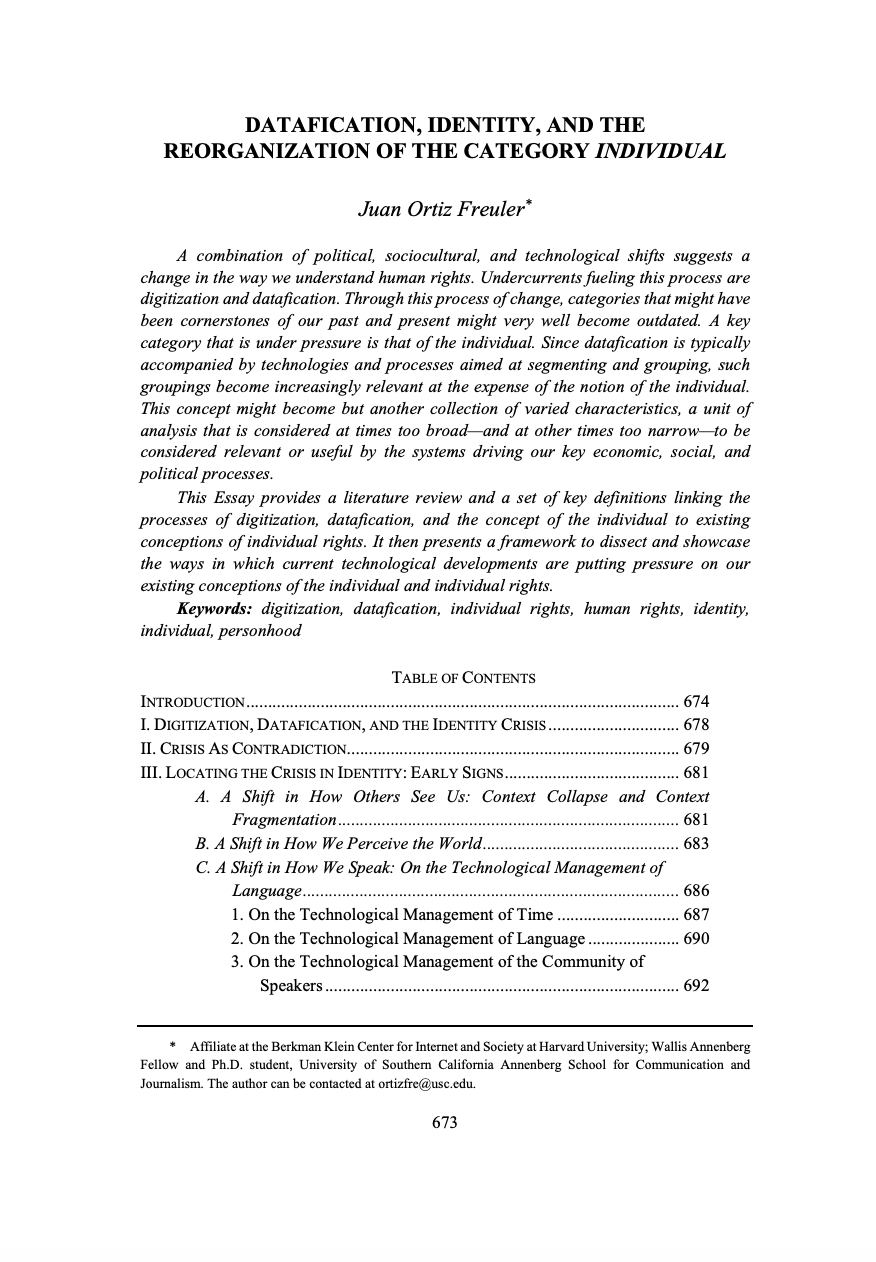
Datafication, Identity, and the Reorganization of the Category Individual
Argues that digitisation and datafication are reshaping the Western idea of the individual. As platforms segment and classify people, the autonomous self becomes less relevant to economic and social systems. The author warns that this algorithmic restructuring, driven by corporate interests—threatens core principles of identity, autonomy, and human rights.
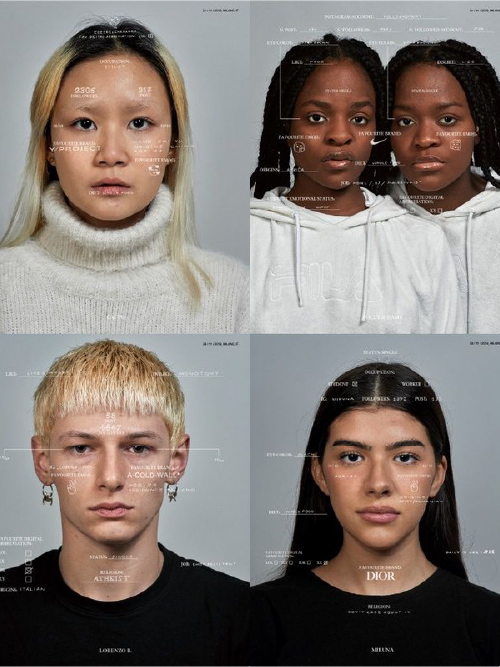
Nice To Read You, Digital Ientities Project
Treating social-media profiles as a form of self-portrait. It argues that online presence becomes a curated identity, shaped by what we post, follow, or like. It explores how digital behaviour creates a new public persona, blurring the line between inner self and online image.
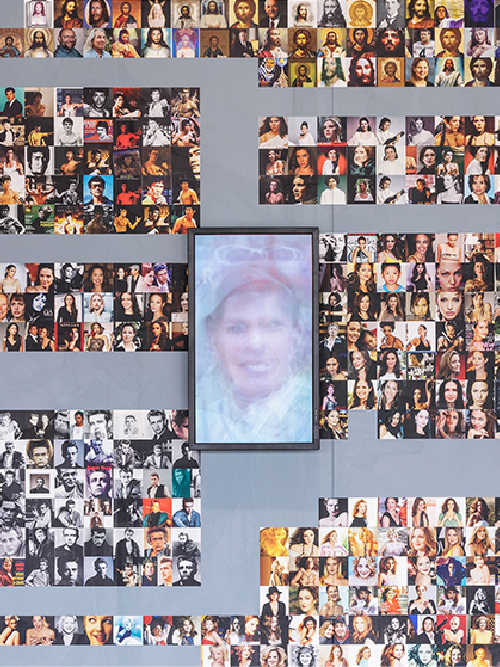
Training Humans Exhibition @ Fondazione Prada in Milan, Italy
Exhibition revealing the hidden history of AI's "training images" which are photos scientists use to teach machines how to see and classify people. It traces these datasets from the 1960s to today, exposing how computer vision embeds bias, surveillance logic and social classification. It urges critical reflection on how AI "sees" humanity.
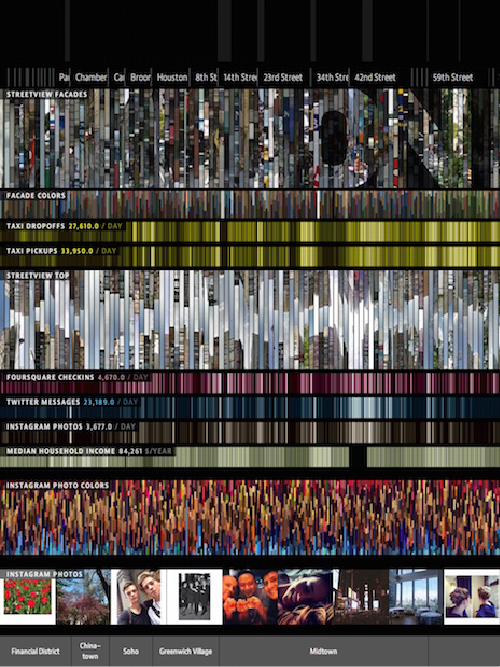
On Broadway - Our New Interactive Urban Data Visualisation Large-scale Installation @ NYPL
Visualises 13 miles of Manhattan's Broadway using social media photos, taxi data, Foursquare check-ins, census statistics, and Street View. Rather than maps or charts, it layers images and data vertically, letting viewers scroll through the city's pulse and explore how digital traces shape urban identity.

Unsupervised — Machine Hallucinations Exhibition, NFT Collection @ Metaverse, MoMA
Transforms MoMA's vast art archive into a generative, dream-like visual installation. Using AI and StyleGAN2, it reimagines thousands of artwords as continuously morphing abstract forms, exploring machine "hallucinations" of human visual culture.
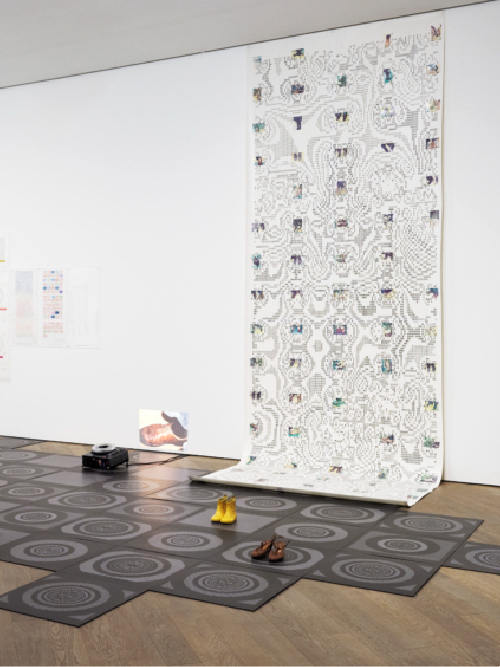
Shoe-Field Tiles Exhibition @ Mudam Luxembourg
Early data-driven artwork that transforms personal objects—in this case, people’s shoes—into a coded system of identity. By cataloguing, classifying, and visualising the shoes worn by visitors, Rapoport exposed how everyday items could be turned into data points and behavioural markers.
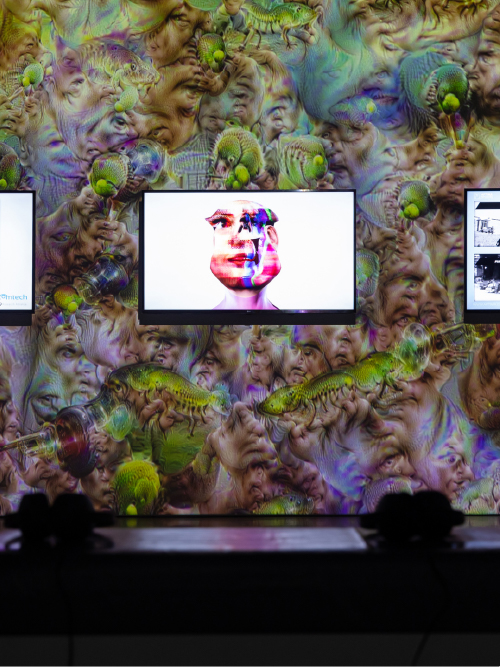
im here to learn so :)))))) Single Channel Video Installation @ SAM
Questions what it means to be human in the age of AI. It combines deepfakes, biometric data, forged identities and AI-generated portraits to explore identity, authenticity and agency to uncover how technology reshapes personhood and challenges our notions of realness.
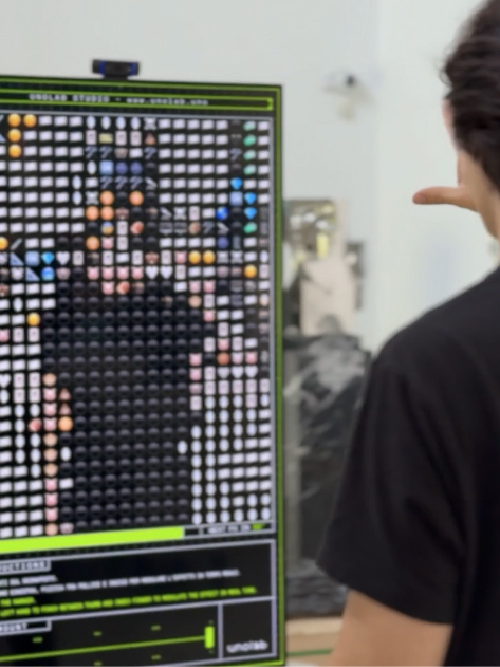
Emoji Mirror Interactive Installation
Interactive installation that converts live webcam feeds into emoji-based images using a custom color-matching algorithm. Built in TouchDesigner with MediaPipe hand-tracking, it lets users control resolution and emoji density through finger festures. The system uses 100 iOS18 emojis and also processes uploaded video.
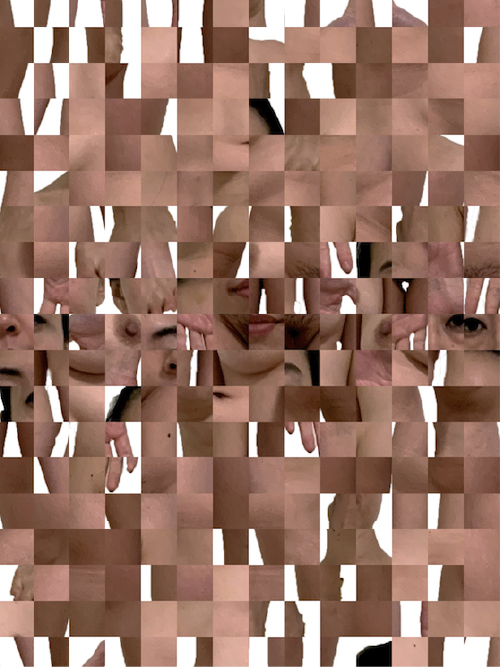
Algorithmic Animal Gaze Exhibition
Explores how computational perception merges with human biology. Through algorithm-sorted images of the artist's body and digital-analog drawings, it probes how AI's "computational eye" sees bodies, questioning vision, cognition, and identity in a data-driven age.
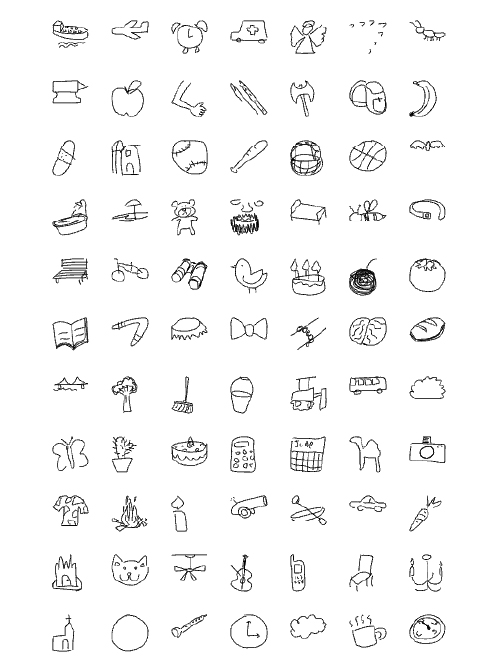
Quick, Draw! AI Experiment Game
Launched as part of Google's A.I. Experiments initiative to collect a large dataset of doodles to train neural networks. Data collected from the game which includes over a billion user-contributed drawings, has been open-sourced to help with machine learning research.
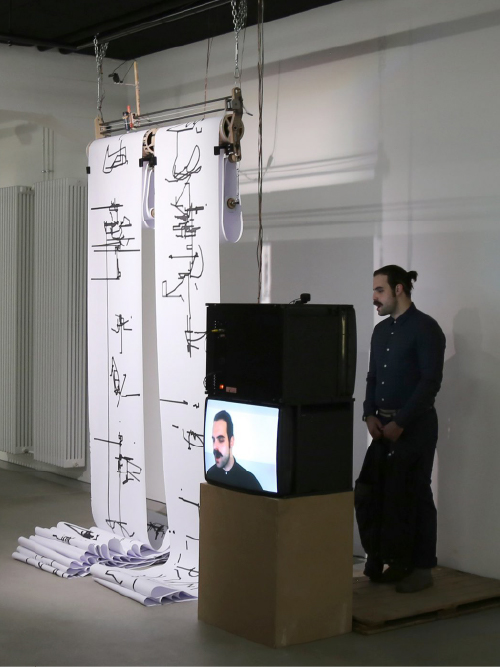
trial, be a plotter Interactive Installation
Users control a CAD plotter with their mouth. When the user opens their mouth, the machine draws, spotlighting human-machine interaction, bodily control, and the compulsion to leave a mark. It subverts functional norms into expressive interruption.
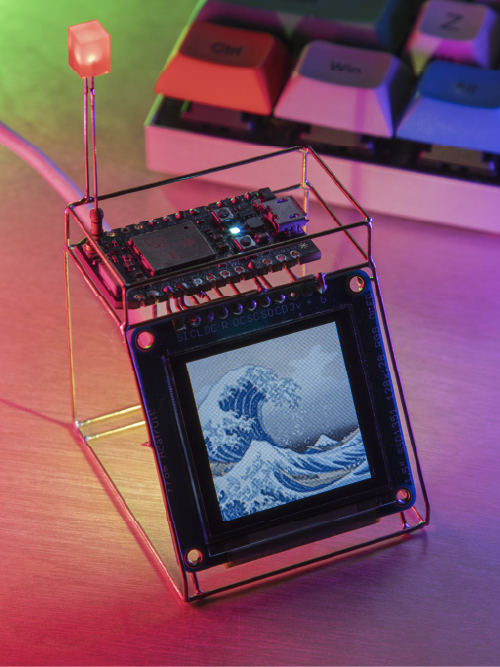
OLED Terminal Immersive Kinetic Sculpture
Bhoite is an engineer and artist who works at the intersection of hardware and sculpture. His works uses wires and Arduino, and they often glow, move, or respond to data, turning abstract signals into tangible, almost anthropomorphic objects. They share a common spirit: curiosity, precision, and a desire to reimagine how people experience technology.
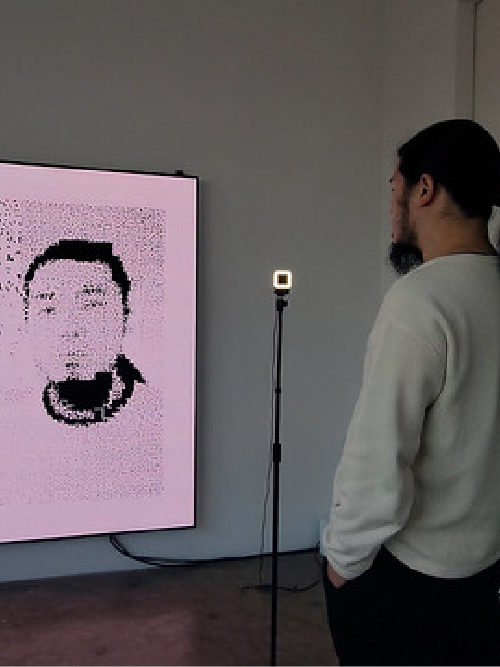
C42E, But Figurative Interactive Installation
Uses a generative quad-tree algorithm where a square subdivides repeatedly based on a webcam pixel data to gradually reveal a figurative image. Once the subdivision reaches maximum depth, the processes reverses and the squares recombine. It creates a looping reveal and conceal installation experience. Programmed using Processing.

The Social Dilemma Drama/Docudrama, Netflix
Tech experts from Silicon Valley sound the alarm on the dangerous impact of social networking. It shares how algorithms build psychological profiles of every user. Tech companies make money by selling users' attention, behaviour patterns, and predictability to advertisers. Every scroll, pause, like, and hesitation becomes data that trains algorithms to anticipate, and influence what people do next.
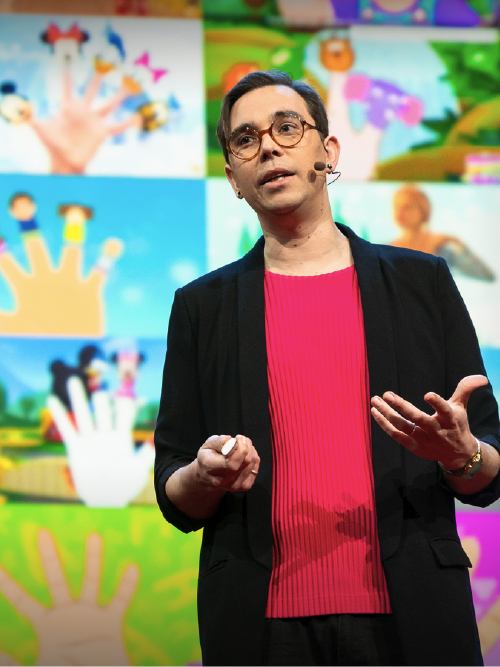
The nightmare videos of children's YouTube TED Talk
Uncovering a dark, strange corner of the internet,
where unknown people of groups on YouTube hack the brains of young
children in return for advertising revenus. These videos exploit and
terrify young minds, and shows us what's wrong with the internet
today.
#AlgorithmicRecommendations #PlatformAlgorithms
#Data-DrivenCuration
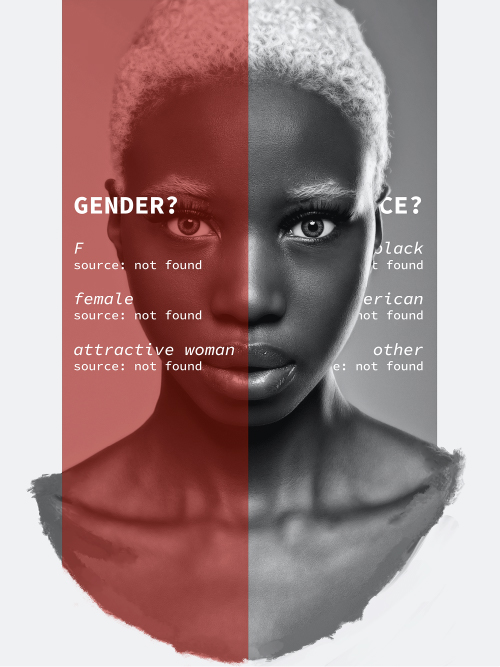
How We've Taught Algorithms to See Identity ACM Conference
How facial analysis datasets classify race and gender,
reveals that most databases lack transparency about how these identities
are defined or annotated. By treating race and gender as fixed and
apolitical, they ignore their sociohistorical
complexity.
#Classification #ComputerVision #Dataset #ML
#FacialAnalysis
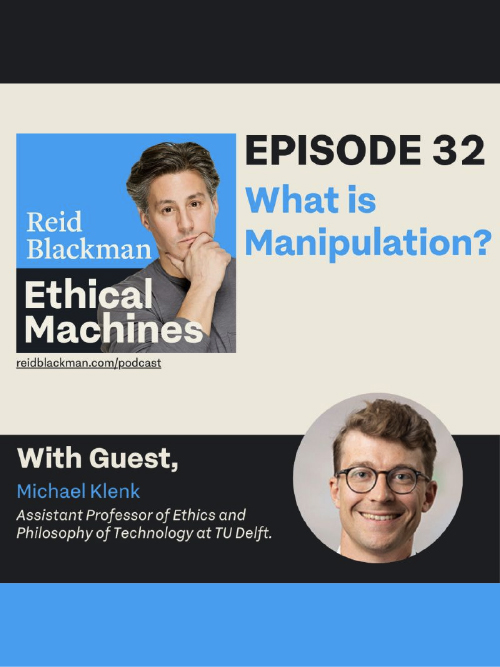
How Algorithms Manipulate Us Podcast
Klenk and Reidman delved into the ethical implications
and philosophical considerations surrounding the nature and ethics of
manipulation and its relevance for AI.
#AI #Ethics
#Manipulation #PhilosophyDiscussion